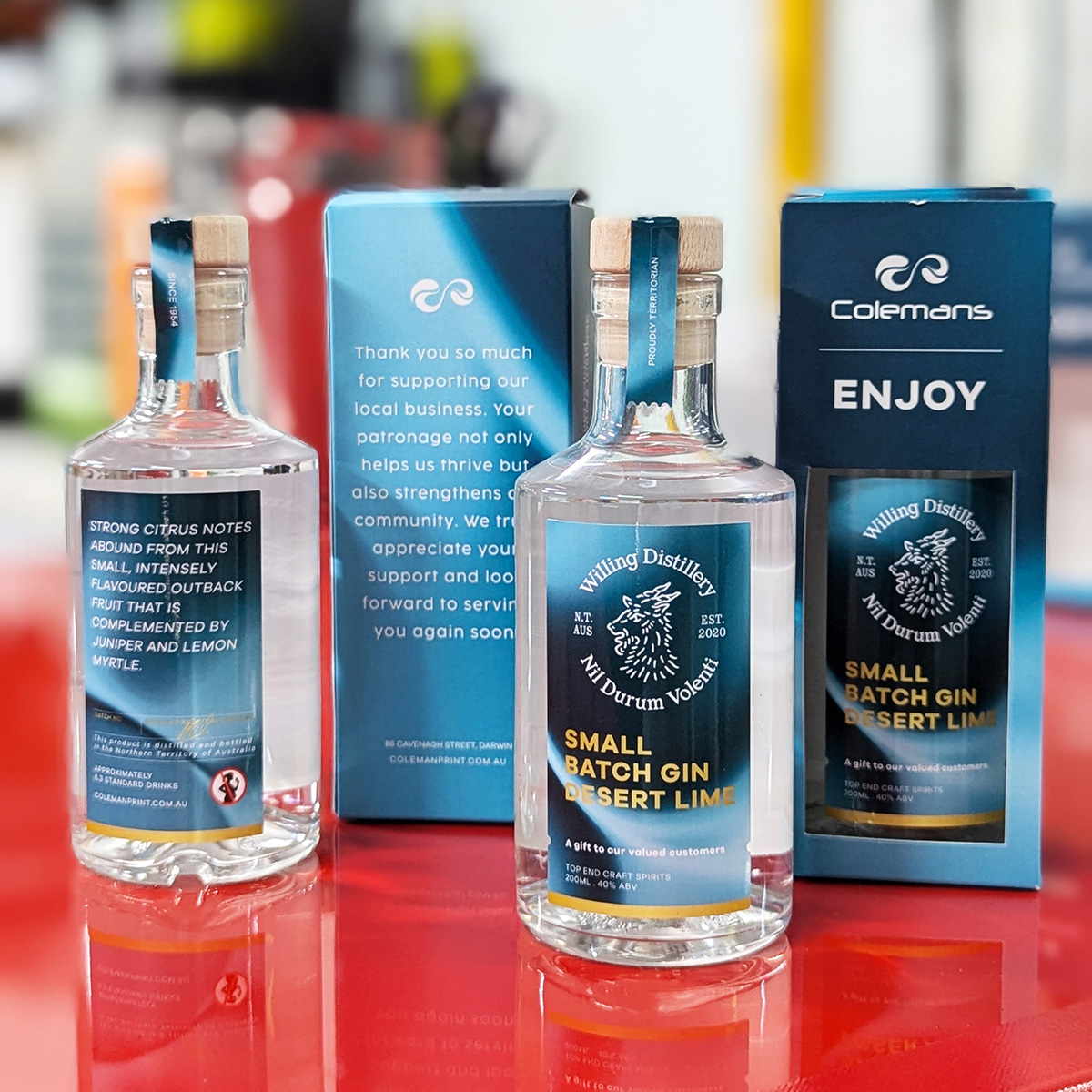
A label might look great when it’s first printed, but what happens when it’s exposed to moisture, chemicals or the harsh Territory sun?
Peeling edges, faded colours and smudged information don’t just affect how customers see your brand. They can create problems with product identification, handling and, in some cases, safety compliance.
Choosing the right label materials comes down to three things working together: the face stock (what’s printed on), the adhesive (what holds it in place) and the protective finish (what protects the print).
Getting that combination right from the beginning can save businesses the cost and frustration of replacing labels that weren’t suited to the job.
Understanding Label Stock: Paper and Synthetic Materials
Not all labels are made for the same job. Paper labels are generally a practical, cost-effective option for dry products stored indoors, such as cardboard packaging and promotional stickers.
For products exposed to moisture, chemicals or more demanding conditions, synthetic labels are often a better choice.
Common synthetic materials include:
- Polypropylene (PP): A flexible, moisture-resistant material commonly used for bottles, food packaging and everyday product labels.
- Polyester (PET): A durable material suited to applications requiring greater resistance to heat, chemicals and abrasion.
- Vinyl: A flexible material suitable for curved surfaces, with certain grades designed to withstand prolonged outdoor exposure.
Each material has its strengths, but no single stock suits every application. The right choice depends on what your label needs to withstand.
How Adhesives and Protective Finishes Affect Label Performance
The face stock is only part of the equation. Even a durable synthetic label can fail if the adhesive isn’t suited to the product or environment.
There are three common adhesive types:
- Permanent adhesives: Designed to provide lasting attachment to a suitable surface.
- Removable adhesives: Allow labels to be removed more easily, depending on the surface and conditions.
- Freezer-grade adhesives: Formulated to perform at low temperatures, including specific cold-application conditions.
Protective finishes add another layer of durability.
Lamination uses a protective film to help resist moisture, abrasion and handling damage. Varnish provides a thinner coating that can reduce scuffing, although it generally offers less protection in demanding environments.
For waterproof labels, the entire construction matters. A water-resistant face stock alone won’t protect printed information if the ink, finish or adhesive isn’t suitable.
Labels for Cold Storage and Frozen Products
A label that sticks perfectly at room temperature might not stay that way in a freezer.
Condensation, moisture and low temperatures can cause standard paper labels to wrinkle, lift or fall off. Adhesives may also struggle to form a reliable bond when applied to very cold surfaces.
For refrigerated and frozen products, synthetic materials such as polypropylene or polyester are often more suitable. Paired with an appropriate freezer-grade adhesive, they can help keep product information secure and readable.
Before ordering freezer labels, check two things: the temperature when the label is applied and the temperature it will reach in storage. An adhesive that performs well once frozen may not bond properly to a container that’s already cold, damp or icy.
For food packaging, Colemans’ specialty labels include freezer-grade options. Discuss your storage conditions with the printer before deciding on a stock.
Labels for Chemicals and Industrial Products
Chemical labels need to do more than look professional. They often carry information that workers rely on to handle, store and use products safely.
Solvents, oils and cleaning products can cause standard paper labels to deteriorate or printed information to smudge and become unreadable.
For these applications, chemical resistant labels made from polyester (PET), combined with an appropriate adhesive and protective laminate, can offer greater durability.
However, resistance depends on the chemicals involved, their concentration and how frequently the label is exposed. A label that withstands occasional cleaning may not tolerate regular contact with industrial solvents.
The information printed on a hazardous chemical label must also comply with applicable Work Health and Safety (WHS) requirements. Australia uses the Globally Harmonised System (GHS), with GHS 7 required for newly manufactured or imported workplace hazardous chemicals.
Depending on the classification, labels may need hazard pictograms, signal words, hazard and precautionary statements, product identification and supplier details. Manufacturers and importers are responsible for correct labelling.
Before approving artwork, check the required information against Safe Work Australia’s guidance and the relevant WHS regulations.
Colemans provides chemical label printing for applications including flammable, corrosive and toxic products.
Labels for Outdoor Use and Harsh Conditions
Darwin’s climate is tough on outdoor labels. Intense UV exposure, high temperatures, humidity and heavy wet-season rain can cause printed colours to fade, materials to crack and adhesives to lose their grip.
For outdoor products, choose a synthetic stock rated for the expected conditions, not just one described as waterproof. UV-rated vinyl or suitably specified polypropylene, combined with compatible inks, adhesive and protective finishes, can help labels withstand prolonged exposure.
A promotional sticker needed for a few weeks has different requirements from an equipment label expected to remain readable for years. Colemans offers vinyl decals, UV laminates and weather-resistant coatings through its custom sticker and label printing services.
Matching the Label to the Surface
Even the most durable material can fail if the adhesive isn’t suited to the surface it’s applied to.
Smooth, clean glass and metal generally provide good adhesion, while some plastics, particularly polyethylene, can be more difficult to stick to.
Cardboard may be dusty or porous, while textured or oily surfaces can prevent the adhesive from making proper contact. Curved bottles and containers also need flexible labels that won’t lift or wrinkle around the edges.
Before approving a large print run, test a sample on the actual packaging. Apply it at the temperature and in the conditions your team will use, then check its performance after normal handling, cleaning or storage. Look for lifted edges, smudged print or damage to the material.
It’s a simple check that can help avoid problems once your products are in use.
Common Label Material Mistakes to Avoid
Choosing a cheaper label stock upfront can cost more if it fails during storage or handling.
Three mistakes worth avoiding are:
- Using paper in wet or cold conditions: Moisture can cause wrinkling and peeling.
- Choosing the wrong adhesive: Always check the surface and application temperature before ordering.
- Skipping protective finishes: Labels exposed to frequent handling, cleaning or moisture may need additional protection.
These mistakes can mean relabelling products, wasting packaging or having stock arrive on shelves looking less professional than intended.
Checking the requirements before printing is considerably easier than fixing a failed batch afterwards.
Choosing the Right Label Stock for Your Product
The best label material isn’t necessarily the most expensive. It’s the one that suits your product and how it’s used.
Before placing an order, ask yourself four questions:
- Environment: Will the label face moisture, freezing temperatures, chemicals or direct sunlight?
- Surface: Is it being applied to glass, plastic, metal, cardboard or something more difficult?
- Lifespan: Does the label need to last a few days, several months or years?
- Compliance: Does your product need specific warnings, instructions or regulatory information?
At Colemans, we believe that to make a difference, a business must know and support its customers. That starts with understanding where your label will be used, what it’s sticking to and how long it needs to last.
We’ve supported Territory businesses since 1954, with print facilities in Darwin and Alice Springs and services covering everything from food and chemical labels to custom stickers.
If you’re looking for custom labels in Darwin, tell our team about your product, its packaging and the conditions it needs to withstand. We can discuss suitable options and whether samples or a test run can be arranged before you commit to a larger order.